Bharatiya Vayuyan Niyam, 2026: A Complete Guide to Building and Protecting Your Pilot Career in India
The aviation industry operates on a foundation of regulation, safety, competency and accountability. For aspiring and professional pilots, understanding aviation regulations is as important as acquiring flying skills.
The Bharatiya Vayuyan Niyam, 2026, comes into force on 1 January 2027. The new regulatory framework replaces the Aircraft Rules, 1937, subject to the applicable repeal and savings provisions. It introduces a comprehensive framework covering licensing, aircraft operations, safety oversight and regulatory compliance.
This guide by Fly Air Aviation Academy explains the important provisions from a pilot's perspective, covering four essential stages: becoming a pilot, exercising licence privileges, understanding daily flight operations and protecting a pilot career.
Episode 1: Becoming a Pilot Under the Bharatiya Vayuyan Niyam, 2026
A pilot's career begins with understanding the eligibility, education, medical fitness and competency requirements behind a licence. For aspiring pilots, Chapter IV and the First Schedule of the new Rules are particularly important.
Understanding the Different Pilot Licences
The Rules recognise Student Pilot, Private Pilot, Commercial Pilot and Airline Transport Pilot licences.
A Student Pilot's Licence supports training under prescribed conditions. A Private Pilot's Licence permits private flying, not flying for hire or reward. A Commercial Pilot's Licence provides professional privileges subject to aircraft ratings and operational requirements. An Airline Transport Pilot's Licence is the higher-level qualification associated with airline command, subject to aircraft rating, experience and operator requirements.
Age and Educational Qualifications
Rules 76 and 77, read with the First Schedule, prescribe minimum age and educational requirements. The minimum age is 18 for a Commercial Pilot's Licence and 21 for an Airline Transport Pilot's Licence. CPL and ATPL applicants must have passed Class 12 with Physics and Mathematics, or an equivalent recognised qualification.
Requirements differ by licence category. Student-pilot entry requirements should not be confused with the educational qualifications required for professional pilot licensing.
Medical Fitness Requirements
Rule 78 requires applicants to meet prescribed medical standards through an approved medical authority. Medical fitness is not a one-time admission requirement. It must be maintained while exercising licence privileges. The DGCA may also require further examination when necessary for safety.
Training, Flying Experience and Competency
Rule 80 requires evidence of prescribed flying experience, examinations and skill tests.
For a CPL (Aeroplanes), the First Schedule requires at least 200 flying hours, including 100 hours as pilot-in-command, together with prescribed cross-country, instrument and night-flying experience. An ATPL (Aeroplanes) requires at least 1,500 hours and additional experience, examinations and competency requirements.
Exemptions for eligible military or foreign-licensed pilots are subject to regulatory approval and are not automatic.
What Should Aspiring Pilots Do Before Enrolling?
Verify your age, academic eligibility, medical requirements and the approval status of your training organisation. Understand the examinations and flying experience required for your intended licence.
A pilot licence is not simply a certificate of course completion. It is evidence of knowledge, experience, medical fitness and competency.
Episode 2: Your Pilot Licence, Aircraft Ratings and Flight Logbook
Obtaining a pilot licence is a major achievement. However, a pilot licence does not authorise its holder to fly every aircraft. Privileges depend on the licence, aircraft rating, medical fitness, competency and applicable operational conditions.
Understanding the Difference Between a Licence and an Aircraft Rating
Rule 72 requires aircraft to be operated by personnel licensed under the Rules and First Schedule. For foreign-registered aircraft, personnel must hold licences under the law of the State of Registry, subject to applicable provisions.
Rule 73 prohibits a pilot from flying an aircraft type not included in the aircraft rating on the licence, except where Rules 74 or 75 apply. Holding a CPL or ATPL does not automatically qualify a pilot to operate a new aircraft type.
Limited Flights for Aircraft Rating Qualification
Rule 74 provides for specified flights to qualify for an extension of a licence to include an aircraft type. It is not general permission to operate an un-rated aircraft.
Qualifying flights are generally confined to the local or designated flying area of a licensed or Government aerodrome, with prior notice to the aerodrome-in-charge. Only persons permitted by the Rule may be carried; passengers cannot be carried simply because the flight is for rating qualification.
The Rule separately permits dual flying with an instructor for general and route-navigation training outside the local flying area within India.
Rule 75 deals with specified testing and other authorised non-revenue, non-passenger flights. These require DGCA authorisation and compliance with the conditions imposed.
Foreign Pilot Licence Validation
Rule 83 allows the Central Government to validate a current foreign licence for specified privileges on Indian-registered aircraft, subject to conditions and a defined period. It is not automatic recognition. Validation ceases if the underlying foreign licence is suspended or revoked.
Why Your Pilot Logbook Matters
Rule 84 requires licensed flight crew to maintain a personal logbook and record flight time in the manner specified by the DGCA.
The type of time recorded must reflect the duties actually performed. Dual instruction and pilot-in-command under supervision must be recorded under the applicable conditions, not simply labelled as pilot-in-command time.
Rules 207 and 208 prohibit fraudulent or altered logbook entries and the fraudulent lending or use of another person's licence.
Before Accepting a Flight Assignment
Check your licence, aircraft rating, medical validity, recent experience and operational authorisations. Keep training and flight records accurate and verifiable.
Your logbook is more than a record of hours. It is evidence of professional experience and regulatory compliance.
Episode 3: The Rules That Follow You Into Every Flight
A pilot's responsibility extends beyond take-off and landing. Personal fitness, duty limits, passenger safety and operational discipline are part of the job.
Fatigue Management: Duty and Rest Requirements
Rule 170 addresses fatigue management for flight and cabin crew. The DGCA may specify flight-time limits, flight duty period limits, duty limits and minimum rest periods.
Indian operators must establish a flight and duty time limitation scheme and submit it for DGCA approval. An approved scheme forms part of the operator's operations manual. Operators may also establish an approved Fatigue Risk Management System.
For pilots, duty and rest limits are safety requirements, not roster preferences. Understand the applicable scheme and report fatigue through the operator's process. Being rostered does not automatically mean you are fit to fly.
Alcohol and Psychoactive Substances
Rule 174 prohibits operating crew from consuming alcohol, sedatives, narcotic or stimulant drugs or preparations within 12 hours before commencement of a flight or during the flight.
It separately prohibits operating while intoxicated or impaired, or with detectable alcohol in breath, urine or blood analysis.
The 12-hour restriction is not a guarantee of fitness. Detectable alcohol or impairment remains prohibited. Medication should be assessed appropriately before flying.
Portable Electronic Devices on Aircraft
Rule 177 regulates portable electronic devices on board aircraft. Their use is restricted unless permitted under the Rule and applicable DGCA conditions.
The Rule provides for the pilot-in-command to permit passenger use of cellular phones or smartwatches after landing and clearing the active runway, except in low-visibility conditions. Certain devices may be permitted where they do not cause interference and the required DGCA approval is in place. Wi-Fi and mobile internet are subject to DGCA conditions and aircraft certification.
The aircraft is considered in flight from closure of all external doors after embarkation until a door is opened for disembarkation. This matters when applying device restrictions.
Flight Data Analysis and Operational Safety
Rule 178 requires an aircraft operator to establish and maintain a flight data analysis programme as specified by the DGCA. Analysis can identify operational trends and risks, helping improve procedures, training and safety controls.
The Pilot's Operational Responsibility
Understand the operator's approved procedures. Respect duty and rest limits. Remain fit for duty, follow device restrictions and contribute to a safety culture.
Safe operations are built through disciplined decisions before, during and after every flight.
Episode 4: Protecting Your Pilot Career — Validity, Reporting and Accountability
A pilot's career requires more than holding a licence. Medical fitness, recent experience, accurate records and regulatory compliance must be maintained.
Licence and Medical Validity
Rule 79 sets validity periods. CPL and ATPL licences are valid for ten years; their medical assessments generally for twelve months. Student Pilot and Private Pilot licences are also valid for ten years; their medical assessments generally for twenty-four months.
Medical validity is reduced in specified categories: after 40 for CPL and ATPL holders in single-crew commercial air transport, after 60 in multi-crew commercial air transport, and after 50 for PPL holders.
Rule 79 provides a 45-day renewal window. If renewal is completed within 45 days before expiry, renewed validity may begin the day after the previous validity ends. Otherwise, it begins from the relevant examination or renewal date, subject to the Rule.
What Happens When a Pilot Licence Expires?
Rule 82 addresses renewal after expiry. If expiry is more than two but not more than three years, a skill test and Air Regulations examination may be required. Beyond three years, examinations and tests for initial issue may be required. The DGCA may direct additional competency checks.
Specified sickness or injury may require a fresh medical examination before privileges can be exercised again.
Foreign Licence Validation
Rule 83 permits validation of a current foreign licence for specified privileges on Indian-registered aircraft, subject to conditions and a defined period. It ceases if the underlying licence is suspended or revoked.
Mandatory and Voluntary Safety Reporting
Rules 204 and 205 establish mandatory and voluntary safety reporting. Mandatory reporting covers specified occurrences; voluntary reporting allows other safety concerns to be raised.
The voluntary system is non-punitive and protects collected safety information. Report through prescribed channels. Safety reporting helps identify risks before they develop into serious incidents.
Disqualification and Professional Integrity
Rule 70 lists grounds for disqualification, including habitual alcohol or narcotics misuse, aircraft-related offences, irresponsible conduct endangering safety, specified convictions, false information or suppression of material facts, and unauthorised document tampering.
The licensing authority must provide an opportunity to be heard. The Central Government may also debar a person temporarily or permanently in the public interest.
Repeal, Savings and Transition
Rule 220 provides for repeal and savings. Existing licence holders should check transition provisions and DGCA directions; approvals should not be assumed to transfer automatically.
Protecting Your Aviation Career
Keep your licence, ratings and medical current. Maintain accurate records and meet competency requirements.
Competence, integrity and compliance help protect your career.
Conclusion: Building a Career Through Competency and Compliance
The Bharatiya Vayuyan Niyam, 2026 provides an important regulatory framework for the future of Indian aviation. For pilots, understanding the Rules is not limited to obtaining a licence. It involves maintaining qualifications, exercising the correct privileges, following operational requirements and accepting responsibility for safety.
Whether you are beginning your pilot training or already working in aviation, regulatory awareness is an essential part of professional development.
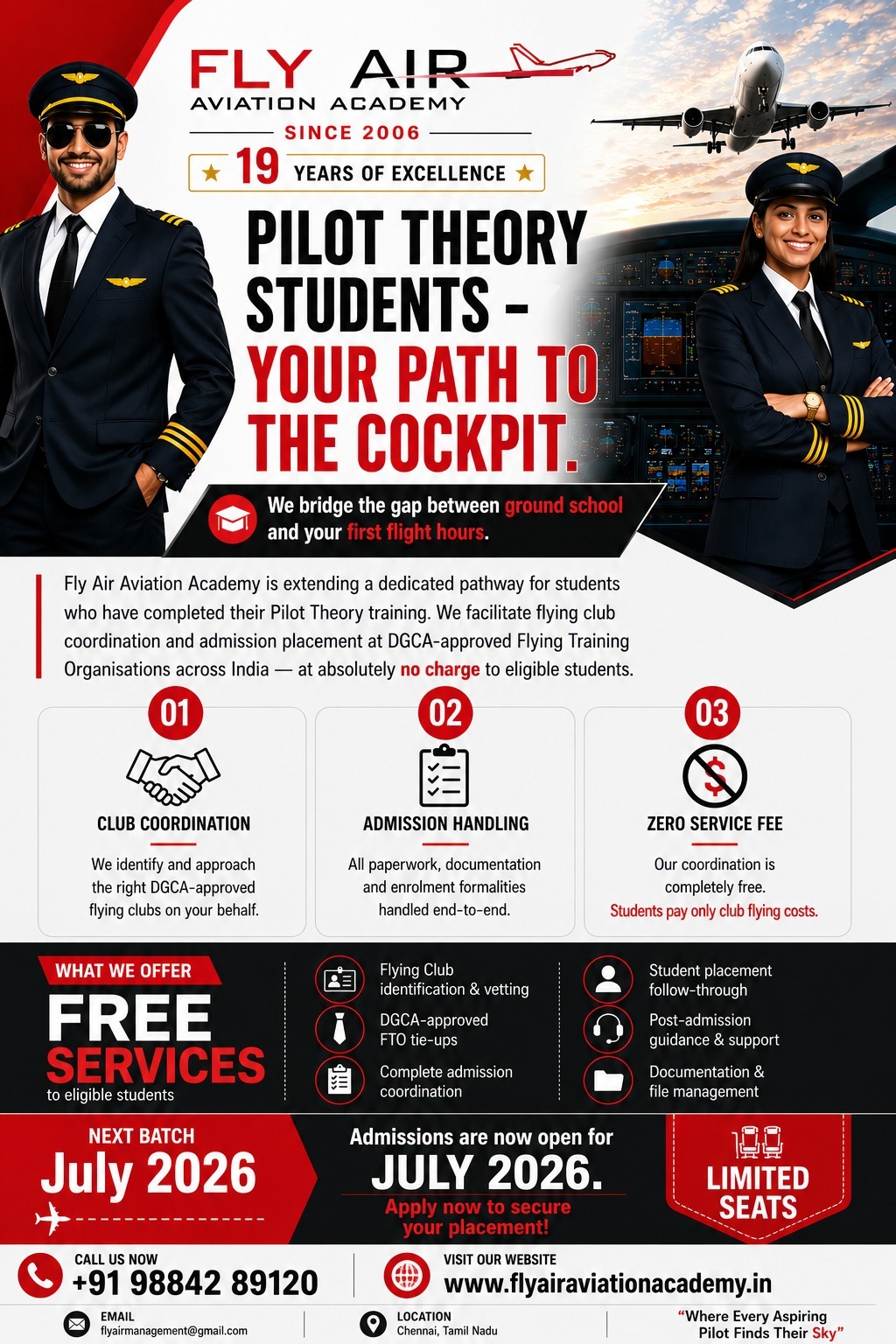
At Fly Air Aviation Academy, we believe aviation education should prepare aspiring professionals not only for their qualifications but also for the responsibilities of the aviation industry.
Start Your Aviation Career with Fly Air Aviation Academy
Interested in building a career as a pilot? Explore aviation training opportunities and understand the pathway towards professional aviation qualifications.
Admissions Open Now. Contact Fly Air Aviation Academy to learn more about aviation education and career pathways.